Q1: How to choose the QuickAntibody series of immune adjuvants?


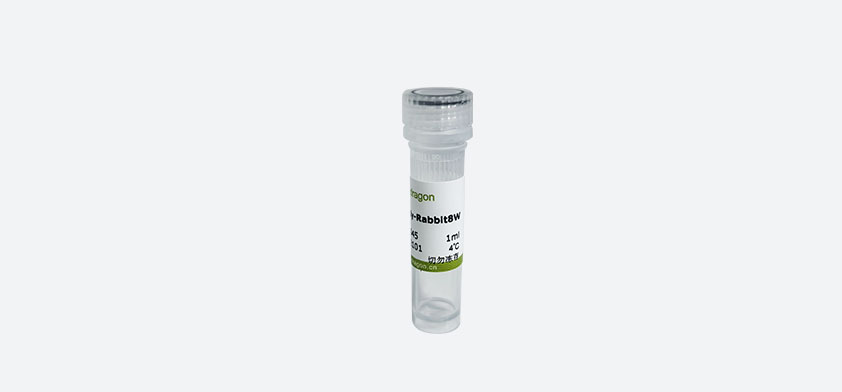
Our water-soluble QuickAntibody series of immunological adjuvants are divided into four types: 5-week immunological adjuvant for mice, 3-week immunological adjuvant for mice, 2-week immunological adjuvant for mice, and 8-week immunological adjuvant for rabbits.
The 5-week adjuvant for mice has the best antibody affinity and antibody titer. Therefore, when preparing monoclonal antibodies, we generally recommend using the 5-week adjuvant for mouse immunization. For the preparation of polyclonal antibodies in mice, we generally recommend using a 3-week immunological adjuvant for mice. If time is tight or the quality requirements for antibodies are not high, mouse monoclonal antibodies can be prepared using 3-week mouse immunological adjuvants, and mouse polyclonal antibodies can be prepared using 2-week mouse immunological adjuvants.
Q2: What are the characteristics of the QuickAntibody series of immune adjuvants?
Compared with the conventionally used Frejens adjuvant, QuickAntibody immunoadjuvant has multiple advantages such as a short immune cycle, fewer injections, no need for emulsification, low antigen dosage, high antibody titer, high antibody affinity, and easy acquisition of conformational epitope antibodies. The details are as follows:
QuickAntibody only requires two doses of immunization, whether for the preparation of monoclonal or polyclonal antibodies, and can reduce the number of immunization doses compared with Frejner's adjuvant.
2.QuickAntibody can significantly reduce the total amount of antigen used by decreasing the number of immunization doses and the amount of antigen per dose. The recommended dosage of the antigen is as follows: (1) For subunit protein antigens with relatively weak immunogenicity, the dosage is 5-50 per dose. g (usually 5-20 μ g for mice and 20-50 μ g for rabbits); (2) Inactivated whole virus or whole bacteria and virus-like particle antigens with strong immunogenicity, 1-10 μ m per injection; g (usually 1-5 g for mice and 5-10 g for rabbits).
3.QuickAntibody features rapid antibody production, high antibody titer and strong antibody affinity. Take the standard immunization program as an example. Whether it is for the preparation of monoclonal or polyclonal antibodies, only two doses of immunization are needed within three weeks. Usually, a high affinity antibody level with an ELISA titer (Cutoff value of 0.1000) as high as 1:10,000-1:10,000,000 can be obtained by the fifth week.
4.QuickAntibody does not disrupt the natural conformation of the antigen, thus making it easy to screen and obtain monoclonal antibodies targeting conformational antigenic epitopes. This is an important feature that Frexner's adjuvant does not possess.
5.QuickAntibody is a water-soluble adjuvant. When in use, it does not require the complex emulsification process of Freund's adjuvant. The antigen and adjuvant only need to be simply mixed to immunize animals.
6.QuickAntibody uses the muscle immune pathway, which greatly facilitates its application compared with the conventional mouse monoclonal antibody preparation process that uses foot pads or endospleen immunity.
One important use of QuickAntibody is that it can be conveniently used to prepare polyclonal antibodies for mice. Conventional polyclonal antibody preparation mostly uses rabbits. Not only are there many immunization shots, large amounts of antigen used and slow antibody production, but also due to the high technical requirements, it is often necessary to entrust specialized units to prepare them. With the QuickAntibody adjuvant, any laboratory animal personnel can conveniently and quickly prepare mouse polyclonal antibodies. The standard immunization program only requires simply immunizing 5 mice, and 1ml of high-quality mouse polyclonal antibodies can be obtained after five weeks. It is strongly recommended to use this adjuvant to prepare mouse polyclonal antibodies. 1ml of high-quality mouse polyclonal antibodies is sufficient to meet the experimental needs of the vast majority of users, including for enzyme-linked immunosorbent assay (ELISA), Western blotting, flow cytometry, immunohistochemistry and immunoprecipitation, etc.
Q3: The antigen concentration is relatively low. Can the dosage of adjuvant be increased
For the immunization of mice, we generally recommend 50 μ l of adjuvant +50 μ l of antigen. It can also be appropriately increased, or one injection can be given to each leg, so that the total is 100 μ l of adjuvant +100 μ l of antigen. The dosage of the adjuvant can also be appropriately reduced. The effective components in the adjuvant are in excess. Generally, reducing it by 20-30% is not a big problem depending on the situation. However, it is not recommended to use too much antigen. For instance, if more than 100 micrograms are directly used to immunize mice, the antigen will not be fully utilized, and the animals will have a strong reaction, and may even die.
Q4: Antigen solvent
Q5: One ml of the adjuvant can immunize several mice
One ml of the adjuvant can immunize several mice
Q6: How to immunize and shock immunity
How to immunize and shock immunity
Q7: Must muscle immunity be used
Must muscle immunity be used
Q8: Swelling or leakage occurs after the adjuvant is used
Swelling or leakage occurs after the adjuvant is used
Q9: Can the interval between immunizations be shortened
Can the interval between immunizations be shortened
Q10: Can plasmids or whole viruses be used for eukaryotic expression
Can plasmids or whole viruses be used for eukaryotic expression
Q11: Can it be used on non-protein antigens such as cells or viruses
Can it be used on non-protein antigens such as cells or viruses
Q12: Can it be used for immunity against nucleic acid plasmids or RNA
Can it be used for immunity against nucleic acid plasmids or RNA
Q13: Can it be used for vaccine research and development
Can it be used for vaccine research and development
Q14: Adjuvant precipitation
Adjuvant precipitation
Q15: The components of adjuvants
The components of adjuvants
Q16: The titer was not satisfactory after two doses of immunization
The titer was not satisfactory after two doses of immunization
Q17: Although the antibody titer met the requirements, there was no cause for the enlargement of the spleen in mice
Although the antibody titer met the requirements, there was no cause for the enlargement of the spleen in mice
Q18: What are the differences of adjuvants, how to choose them, and can they be mixed
What are the differences of adjuvants, how to choose them, and can they be mixed
Q19: Why are water adjuvants more expensive than Frejner adjuvants
Q20: Can it be stored at -20℃
Can it be stored at -20℃
Q21: Antibody yield from immunizing one rabbit with the Rabbit 8w adjuvant
Antibody yield from immunizing one rabbit with the Rabbit 8w adjuvant
Q22: Can rapid adjuvants be used subsequently after one injection of Frejner's adjuvant for immunization
Can rapid adjuvants be used subsequently after one injection of Frejner's adjuvant for immunization
Q23: Can it be used in parallel with aluminum adjuvants
Can it be used in parallel with aluminum adjuvants
Q24: In the instructions, the antigen dosage for whole virus/whole bacteria with water adjuvant is 1-10ug. What does this refer to?
The 1-10ug in the instruction manual refers to the total protein quantification of all bacteria or viruses. However, the total protein may be impure and very mixed, and it is uncertain whether it can effectively produce antibodies against the target protein. If it is pure protein, 1 microgram or even several hundred ng is sufficient
Q25: Applicable species for the adjuvant
So far, QuickAntibody has been used to immunize various species such as mice, rats, rabbits, guinea pigs, goats, alpacas, chickens, and monkeys, and the results have all been good. The adjuvant itself is a mixture of multiple adjuvants rather than a single adjuvant. Species Adjuvant Type Antigen dosage ug Antigen Volume ul Adjuvant Volume ul Mouse QuickAntibody-Mouse 5-40ug 50 50 Rat, Guinea Pig QuickAntibody-Mouse 20-50ug 70 70 Rabbit, Chicken QuickAntibody-Rabbit 50-100ug 100 100 Goat, alpaca QuickAntibody-Rabbit 200-500ug 300-500 300-500 Monkey QuickAntibody-Rabbit 200ug 200-300 200-300
Q26: If the antigen concentration is low, can the adjuvant dosage be increased?
For the immunization of mice, we generally recommend 50 μ l of adjuvant +50 μ l of antigen. It can also be appropriately increased, or one injection can be given to each leg, so that the total is 100 μ l of adjuvant +100 μ l of antigen. The dosage of the adjuvant can also be appropriately reduced. The effective components in the adjuvant are in excess. Generally, reducing it by 20-30% is not a big problem depending on the situation. However, it is not recommended to use too much antigen. For instance, if more than 100 micrograms are directly used to immunize mice, the antigen will not be fully utilized, and the animals will have a strong reaction, and may even die.
Q27: What does the dosage of 1-10 micrograms of water adjuvant for all-virus and all-bacterial immunoantigens in the instruction manual refer to
What does the dosage of 1-10 micrograms of water adjuvant for all-virus and all-bacterial immunoantigens in the instruction manual refer to
Q28: Adjuvant applicable species
Adjuvant applicable species
Q29: How many mice can be immunized with 1ml of adjuvant?
The amount of adjuvant used for each immunization is 50 μ l, and there are two immunizations in total. Therefore, 1ml can immunize approximately 8 mice. Standard procedure: One mouse is immunized with two injections, 50 μ l of adjuvant and 50 μ l of antigen, totaling 100 μ l for one injection. Therefore, the adjuvant dosage for one mouse is 100 μ l. Each 1ml tube of our adjuvant can theoretically immunize 10 animals, but due to the damage of the syringe used and the adhesion of the centrifuge tube, etc., it has been affected. Only about 8 mice can be immunized.
Q30: How to immunize and perform booster immunization?
Mix and use immediately. Take it to the animal room and mix it evenly. Immunize it into the animal's body within 10 minutes after mixing. If left for a long time, the precipitate will slowly sink, and the distribution of effective components will be uneven, which will affect the immunization effect. Customers can also premix in the laboratory first. After entering the animal room, they can directly mix by pipette tip or shake up and down to mix. Do not use a syringe to mix by pipette, as it will not mix well.
How to immunize: With the special QuickAntibody water adjuvant of Boao Long, the site for immunizing mice is the inner muscle of the hind leg root. It is a single-point injection immunization. The leg muscles of mice are not too many, so the needle should not be inserted too deeply to avoid piercing the bone.
Shock immunoassay: Intraperitoneal injection of 20 to 50 micrograms of antigen, with a volume of 100 to 200 micrograms. The intraperitoneal injection site was located in the lower abdomen on the left or right side of the mouse, avoiding the liver and the lower and middle abdominal bladder, and penetrated the peritoneum along the Angle of the leg. When the 1ml syringe needle enters about one-third, there is a feeling of being pierced through.
"
Q31: Is intramuscular immunization mandatory?
Some of our adjuvants are used as adjuvants for human vaccines later on. All optimizations are carried out using muscle immunization. Therefore, it is recommended to use muscle immunization, but subcutaneous one-point or two-point immunization can also be used. Intraperitoneal immunization and tail vein immunization are not recommended.
Q32: Swelling or leakage after using the adjuvant.
Our adjuvant is for mouse hind leg muscle immunization. Due to some clients' previous use of intraperitoneal immunization or subcutaneous multi-point immunization, they are not familiar with muscle immunization and may experience bulges. The main reason for the bulges is that the injection has reached the subcutaneous layer. Clients can apply it deeper. For the first use, it is recommended to wipe the hind leg with an alcohol cotton swab. During immunization, avoid the two veins on the inner side of the hind leg. After immunization, rotate the needle half a circle, let it stand for a few seconds, and then pull it out.
Q33: Can the immunization interval be shortened?
It is generally not recommended to shorten the time as it involves the affinity and titer of antibodies. However, for the measurement of serum titer, our instructions state that it should be done 14 days after the second immunization. In terms of time, the titer can be measured 7 to 10 days after the second immunization. Once the titer reaches the standard, several impulse immunological tests can be combined
Q34: Antigen solvent
Q35: Can it be used for eukaryotic expression plasmids or whole viruses?
Plasmids won't work, but proteins and viruses can
Q36: Can it be used for cellular or viral antigens, i.e., non-protein antigens?
Our adjuvants have been tested through tens of thousands of antigen immunization experiments. Currently, the types of antigens available for immunization include cells, viruses, proteins, polypeptides, polysaccharides, lipids, heavy metals, antibiotics, pesticides, drugs, and food safety compounds, all of which have achieved excellent results. We have a wealth of industrial customer cases and hundreds of literature articles to support this.
Q37: Can it be used for immunization with nucleic acid plasmids or RNA?
For nucleic acid immunization, our adjuvant is not applicable. Liposomes can be used instead.
Q38: Can it be used for vaccine development?
Some of our adjuvant components are used for vaccine research and development, but the cooperation will not be completed until the second half of 2022. Our adjuvant components are used for the development of human vaccine adjuvants. Generally, customers cannot afford to use them for animal vaccines, except for pets and special animals.
Q39: Adjuvant precipitation.
The precipitate is the effective component of our adjuvant and cannot be removed by centrifugation. Last year, there was less precipitate in the adjuvant, but this year there is more. The adjuvant was updated and replaced in November 2021. The new adjuvant has been verified for more than five years and has better effects.
Q40: Composition of the adjuvant.
This adjuvant is a confidential formula of our company. The specific ingredients are not available for disclosure.
An English description of the principle can be provided QuickAntibody is a proprietary novel adjuvant designed specifically for the preparation of monoclonal as well as polyclonal antibodies in mice. It is formulated with PAMPs (pathogen associated molecular patterns) and cationic polymers to activate cytosolic PRRs (pathogen recognition receptors)."
Q41: Unsatisfactory titer after 2 immunizations.
For general antigens with weak immunogenicity or for customers using our product for the first time, the titer may not increase after two doses. At this point, a third dose can be administered 14 days after the second dose, which usually leads to an increase of an order of magnitude. However, the maximum number of doses is four. If the titer still does not increase after four doses, it is generally recommended to re-administer or modify the antigen. The more common ones are small molecule antigens such as polypeptides and small molecules. It is generally recommended to increase the number of aa peptides to more than 20, which can effectively enhance the antibody titer.
Q42: Although the antibody titer meets requirements, why is the mouse spleen not enlarged?
This is normal. Traditional adjuvants contain BCG vaccine. BCG vaccine is a strong immunogen. Many B cells in the spleen target BCG vaccine, so they are larger
Q43: Differences between adjuvants, how to choose, can they be mixed?
The five-week adjuvant for mice was the first to come out. Based on the five-week adjuvant for mice, the three-week adjuvant and the two-week adjuvant were optimized. Their main components were the same, but the ratios were slightly different. Therefore, it is generally not recommended to mix them. There are significant differences in adjuvants between rabbits and mice
Mouse adjuvants and rabbit adjuvants are not recommended to be mixed. One of the main components of adjuvants has species selectivity. Mouse adjuvants themselves can be mixed, but if there is enough time, it is not recommended to mix them.
Q44: Why is the water adjuvant more expensive than Freund's adjuvant?
Just looking at the price, it's a bit expensive, but it saves time cost
Save one month's time cost and the cost of raising mice
2. Save the amount of antigen used, only 1/5 to 1/10 of the original. The price of 1mg of natural antigen can reach tens of thousands of yuan.
Our adjuvant components are very stable. We have conducted a one-month test at 50℃ and found no effect. However, it cannot be frozen, as freezing can have a significant impact on the immune effect. For general storage, it can be placed once near the door of a 4℃ refrigerator, not at the innermost part. Some refrigerators have poor temperature control, and placing it at the innermost part will keep the temperature below 0℃.
Sure. The functions of different adjuvants are similar, and different adjuvants can be tried to be used alternately
Q45: Can it be stored at -20°C?
Our adjuvant components are very stable. We have conducted a one-month test at 50℃ and found no effect. However, it cannot be frozen, as freezing can have a significant impact on the immune effect. For general storage, it can be placed once near the door of a 4℃ refrigerator, not at the innermost part. Some refrigerators have poor temperature control, and placing it at the innermost part will keep the temperature below 0℃.
Q46: The antibody production of a rabbit immunized with 8w adjuvant
The antibody production of a rabbit immunized with 8w adjuvant
Q47: After one immunization with Freund's adjuvant, can the Quick Antibody adjuvant be used for subsequent immunizations?
Sure. The functions of different adjuvants are similar, and different adjuvants can be tried to be used alternately
Q48: Can it be used in parallel with aluminum adjuvant?
They can be used in combination. Any immune method can produce the effects of cellular immunity and humoral immunity.
Q49: For booster immunization, can I use the immunogen plus your Quick Antibody adjuvant? The immunogen is cells, not processed protein.
The main function of impulse immunity is to activate spleen cells to a relatively high extent, which has a significant impact on the ability of hybridoma cells to secrete antibodies after fusion. Therefore, direct antigen impulse immunity is still recommended. Moreover, cells themselves as immunogens are likely to have the problem of low titer, and their components are rather diverse. The target epitope protein may not necessarily be the dominant immunogen. Previously, General Manager Yan said that taking on similar technical services for preparing antibodies through cellular immunity basically could not meet the experimental expectations.
Q50: Are there weight requirements for rabbits?
There is no weight requirement. Currently, when our company immunizes rabbits, we use healthy 6-week-old New Zealand white rabbits (with bright eyes and clean butts, weighing about 2 kilograms).
Q51: Adjuvant applicable species
Immunized with various species such as mice, rats, rabbits, guinea pigs, goats, alpacas, chickens, and monkeys, all with good results. The adjuvant itself is a mixture of multiple adjuvants rather than a single adjuvant.
Q52: Choice of antigen solvent.
Q53: Why are most of my antibodies IgM?
Glycoprotein immunogens, such as CA125, are highly prone to generating IgM and difficult to obtain IgG
Q54: Can whole bacteria be used for immunization?
The surface of bacteria is all polysaccharides, making it difficult to obtain protein epitope antibodies. Polysaccharide epitope antibodies have a high titer. It can be attempted to immunize 1-5 micrograms after quantification by BCA
Q55: Can the QuickAntibody adjuvants for mice and rabbits be mixed? Can the mouse adjuvant be used for rabbits?
Rabbit adjuvants and mouse adjuvants should not be mixed. They are species-specific and it is not recommended to use them together



 Save
Save
 Phone
Phone
 Contact Us
 QQ
QQ
 QR Code
 Scan the QR code